#Alia Bhatt!!!

Born into the Bhatt family, she is the daughter of filmmaker Mahesh Bhatt and actress Soni Razdan. After making her acting debut as a child in the 1999 thriller Sangharsh, Bhatt played her first leading role in Karan Johar‘s teen drama Student of the Year (2012).

She went on to establish herself with starring roles in several films produced by Johar’s studio Dharma Productions, including the romances 2 States (2014), Humpty Sharma Ki Dulhania(2014), and Badrinath Ki Dulhania (2017); and the coming-of-age drama Dear Zindagi (2016). Bhatt won the Filmfare Critics Award for Best Actress for playing a kidnapping victim in the road drama Highway (2014), and two Best Actress awards at the ceremony for playing a Bihari migrant in the crime drama Udta Punjab(2016) and a spy in the thriller Raazi (2018). The latter emerged as one of Hindi cinema’s biggest-earning female-led films, and her highest-grossing release came with the musical drama Gully Boy (2019).

In addition to acting in films, Bhatt has launched her own line of clothing and handbags and is the founder of the ecological initiative CoExist. She has sung six of her film songs, including the single Samjhawan Unplugged” in 2014, and she participates in stage shows and concert tours…

EARLY LIFE :-

Bhatt was born on 15 March 1993[2][3] in Mumbai to Indian film director Mahesh Bhattand actress Soni Razdan. Her father is of Gujarati descent[4][5] and her mother is of Kashmiri and German ancestry.[6][7][8] Director Nanabhai Bhatt is her paternal grandfather. She has an elder sister, Shaheen (born 1988)[9] and two half-siblings, Pooja Bhatt and Rahul Bhatt. Actor Emraan Hashmi and director Mohit Suri are her maternal cousins, while producer Mukesh Bhatt is her uncle.[10]Bhatt was educated at the Jamnabai Narsee School in Mumbai.[11] She holds British citizenship.[1]

Bhatt’s first acting role was as a child artist in Sangharsh (1999), starring Akshay Kumar and Preity Zinta where she played the younger version of Zinta’s character…

[12]

ÀBĐ ###@ABRAHAM BENJAMIN DEVILLIERS

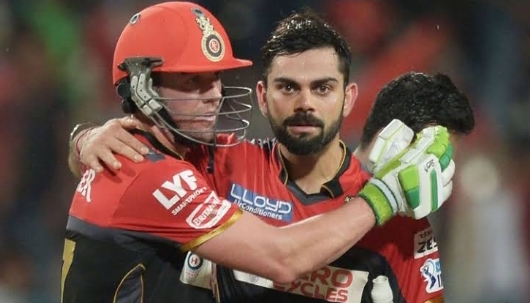
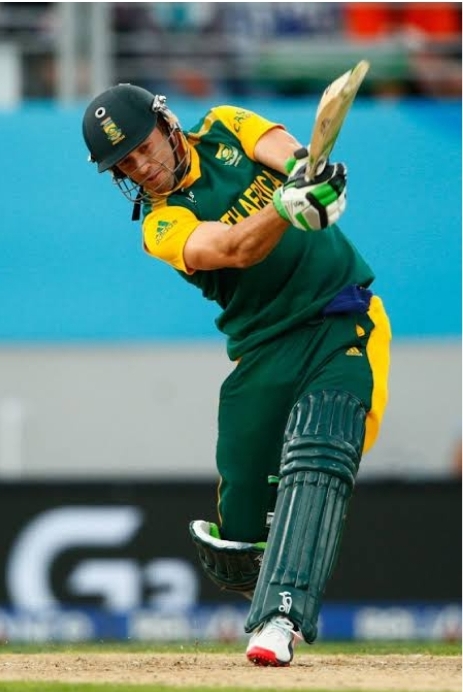
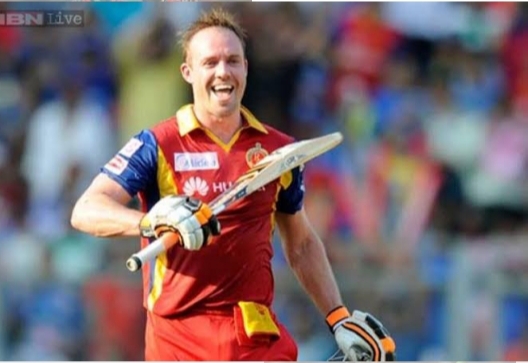
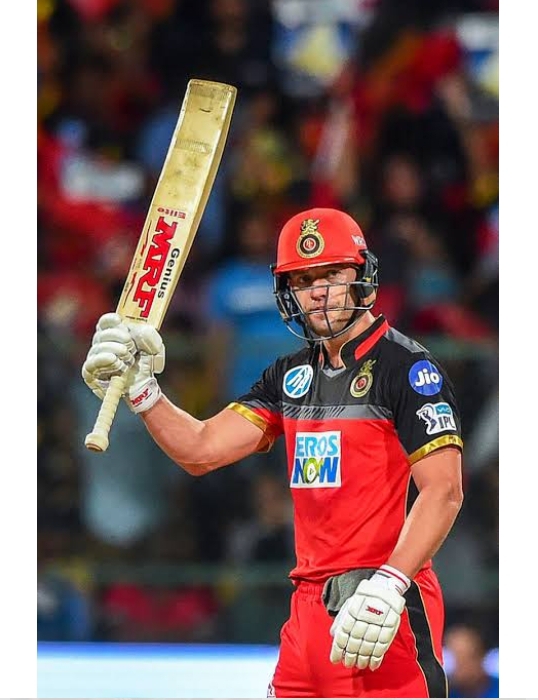
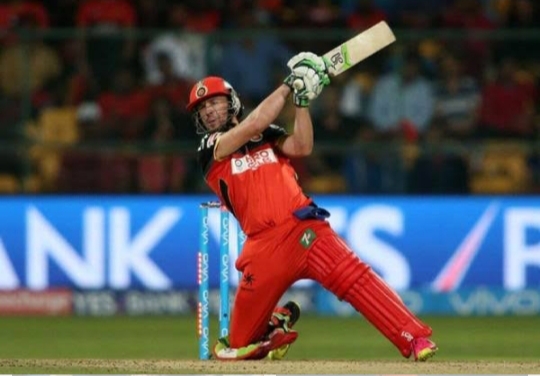
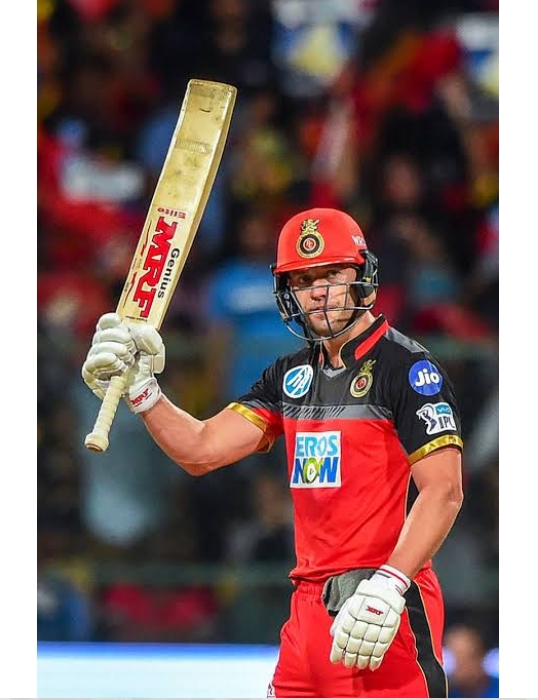
Abraham Benjamin de Villiers (born 17 February 1984), commonly known as AB de Villiers, is a former South African cricketerwho played for the South African national team. Widely regarded as one of the greatest cricketer to have played the game, he holds many batting records, including the world’s fastest One-Day International (ODI) 50, 100 and 150, the fastest Test century by a South African and the fastest Twenty20 International (T20 International) 50 by a South African batsman. He also plays for Titans in South African domestic cricket and Royal Challengers Bangalore in the Indian Premier League.

He began his international career as a wicket-keeper/batsman (returning to the role for a few years in mid-career), but he has played most often solely as a batsman. He could bat at various positions in the batting order but predominantly in the middle-order. Noted as one of the most innovative batsmen in the modern game, de Villiers is noted for many unorthodox shots behind the wicket-keeper and slips.

[1] He made his international debut in a Test match against England from 2004 and first played an ODI in early 2005. His debut in Twenty20 International cricket came in 2006. As of 2016, he has passed 8,000 runsin both Test and ODI cricket and has a batting average of over fifty in both forms of the game. He is also the only batsman in ODI cricket to have completed a trio of 5000+ runs, 50+ average and 100+ strike rate in his career.[2] As of May 2018, from the date of his international debut onwards, he has scored 20,014 runs in international cricket. Within the same period he lies just second behind Kumar Sangakkara.[3]

AB De Villiers captained South Africa in all formats, but since his injuries, he stepped down from Test captaincy and continued in ODI and T20 . However, with defeats in the 2017 ICC Champions Trophy and England series, he stepped down from ODI and T20 captaincy as well.[4] On 23 May 2018, he announced that he was retiring from all forms of international cricket.

Abraham Benjamin de Villiers was born in Warmbad, South Africa,[8] and enjoyed what he later described as the “really relaxed lifestyle up there, where everyone knows everyone”.[9] He went to high school in Pretoria along with teammate Faf du Plessis. They attended the prestigious Afrikaanse Hoër Seunskool. AB returned home for weekends. His father was a doctor who had played rugby union in his youth, and he encouraged his son to play sports; as a child, De Villiers played cricket at his home. His autobiography was published in September 2016.[9] He has been involved in charity works.[10]

De Villiers is a right-handed batsman who has accumulated over 8,000 runs in Testsincluding 22 centuries and 46 fifties. He holds the record for most Test innings without registering a duck (78),[11] before being dismissed for nought against Bangladesh in November 2008. He also holds the second-highest individual score by a South African batsman, with 278 (not out). Until 2012 he was an occasional wicket-keeper for South Africa, although after the retirement of regular Test keeper Mark Boucher and under his own captaincy he has started to regularly keep wicket for the national side in Tests, ODIs and T20Is. He gave up wicket-keeping in 2015 and handed the gloves to debutant Quinton de Kock.

He holds the records for the fastest 50 (16 balls), 100 (31 balls) and 150 (64 balls) of all time in One Day Internationals by any batsmen, and also holds the fastest hundred by a South African in Tests and the fastest 50 by South African in T20Is. He is a three-time ICC ODI player of the year, winning the award in 2010, 2014 and 2015.

He succeeded Graeme Smith after the 2011 Cricket World Cup for the ODI captaincy and Hashim Amla after the Second Test of the England in South Africa series for the Test captaincy. He stepped down from Test captaincy in December 2016 due to an elbow injury which kept him out of the team for a long period…

De Villiers proposed to his girlfriend, Danielle Swart, at the Taj Mahal in 2012, after five years of dating. The couple got married in March 2013, in Bela-Bela, South Africa. They have two sons.[50][51]

He is a devout Christian and has stated that his faith is crucial to his approach to life.[52]He is also an accomplished guitar player and a singer. In 2010, he released a bilingual pop album entitled Maak Jou Drome Waar with his friend and South African singer Ampie du Preez.[53]

He is also a Manchester United fan, having followed the club since Ryan Giggs’s debut.[54]De Villiers said that his favourite footballer is Lionel Messi as he was asked by a fan to choose between Cristiano Ronaldo and Lionel Messi on Twitter

The story of CRICKET!!!

Cricket is one of the most popular sports of modern times. And interestingly India is synonymous with Cricket. But was it always this way? Cricket originally started out as a sport only played by the British. So how did it become synonymous with India? Isn’t it intriguing? Let us read out the story of cricket.
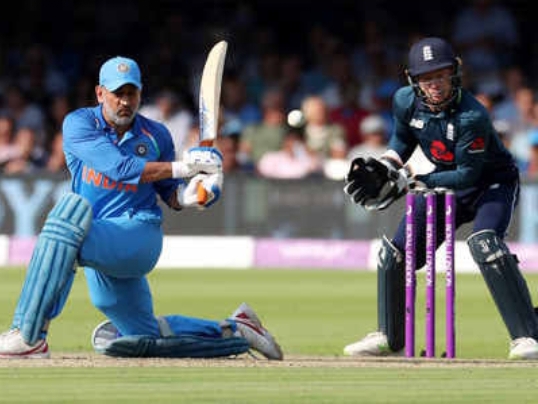
The Story of Cricket

Cricket was invented in the South Eastern part of England in the 19th century. The British carried the game to wherever they went. This includes their colonies in Africa and Asia. After gaining freedom from the rulers, these colonies became organized in the form of Commonwealth.

the story of cricket

Thus, the story of cricket is primarily limited to the Commonwealth countries. The main countries are India, Pakistan, Sri Lanka, Bangladesh, Australia, New Zealand, England, West Indies, Zimbabwe, South Africa and Kenya.
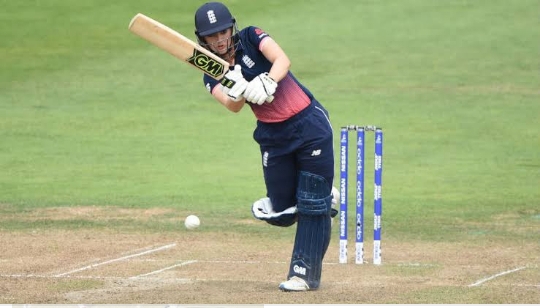
Representation of Cricket

Since its invention, the story of cricket always stood for fair play, gentlemanliness, and discipline. However, in recent times, it has become more commercialized.
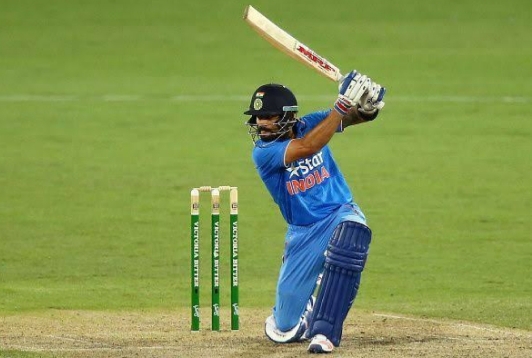
Cricket as a Villagers’ Game

There are some important rules that were followed in this game right from the early ages.

  • The rules of the game were formed before Industrial Revolution. So, a match could go on and on till it was called off. After the Industrial Revolution, the game became strictly time-bound.
  • Cricket was originally played on common lands in the countryside. The size of the common lands varied from the village, and region to region. Therefore, the size of the ground to be played on was left for mutual decision before any game.
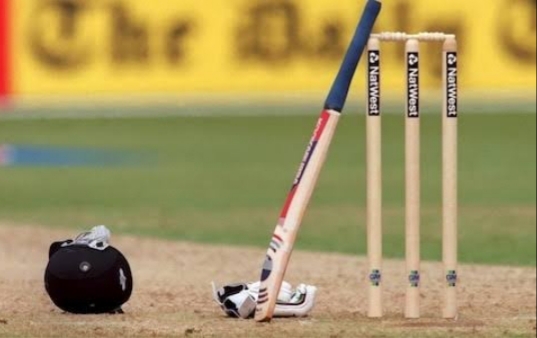
Materials Used In The Game

All the materials that were used in the game were made from natural resources like wood. The bat and the stumps were made of wood. With technological advancements, new things started coming up. The invention of vulcanized rubber led to the introduction of pads in 1848. Protective gloves were introduced soon thereafter. Soon after, there was a popularity of helmets made out of metal and synthetic lightweight materials.
Laws of Cricket

In this segment, we will have a look at the various laws that were implemented with regards to the game.

  • The first written ‘Laws of Cricket’ were drawn up in 1744. According to these laws, the principals shall choose from amongst the gentlemen present two umpires, who shall absolutely decide all disputes.
  • The stumps were bound to be 22 inches high and the bail across them six inches. The ball must be between 5 and 6 ounces, and the two sets of stumps 22 yards apart.
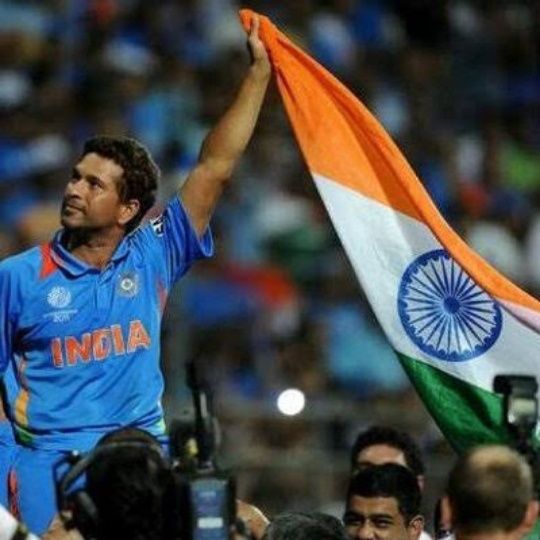
Cricket During The 1760s-70s And The 19th Century

During this phase, it became common to pitch the ball through the air. The bowlers could now get the options of length, deception through the air, plus increased pace. It also opened new possibilities for spin and swing. In the year 1774, the first leg-before-wicket law was established.

Soon after, the concept of the third stump became common. In the 19th century, the game saw some major changes. The concept of wide balls was accepted and the exact circumference of the ball was also decided. Pads and gloves became a common thing.
The Spread of Cricket

In several colonies, cricket became a popular sport either by white settlers (as in South Africa, Zimbabwe, Australia, New Zealand, the West Indies and Kenya) or by local elites who wanted to copy the habits of their colonial masters, as in India.

British imperial officials not only brought the game to the colonies, but they also made a lot of effort to spread the game, especially in colonial territories. Playing cricket became a sign of superior social and racial status. The first non-white club in the West Indies was established towards the end of the 19th century and the game became popular in the Caribbean.

When the West Indies won their first Test series against England in 1950s, the country celebrated it in a big way as a major achievement. However, the first time that the team was led by a black pack was in 1960 when Frank Worrell was named the captain.

Relationship with Race and Religion

In colonial India, Cricket was organized on the principle of race and religion. The first official record of the game being played in India is from 1721. The 18th century saw the game in India as a sport, primarily played by British military men and civil servants in all-white clubs and gymkhanas.

The first Indian community to start playing cricket was the small community of Zoroastrians, the Parsis. It was they who founded the first Indian cricket club, the Oriental Cricket Club in Bombay in 1848


IMPORTANCE OF FRIENDSHIP!!!

It is rightly said, “Friends are the family we choose ourselves”. It is as important to have friends as it is to have a family. Good friends help, guide and support us at every stage.

Friends give us emotional support, they help us during difficult times and make us feel special. Blessed are those who have true friends in life.

Friends are extremely important for everyone. Whether it is a toddler, a teenager, a middle aged person or an old person – everyone needs good friends around to live life to the fullest.

During childhood, friendship helps in making us understand and develop the habit of sharing and caring. Small kids develop friendship faster and enjoy the company of their friends. They play and learn together. Friends are important for their proper growth and development. As teenagers, friends become all the more important for us. We go through numerous emotional, physical and mental changes during our teenage. Many of the problems faced during this age cannot be discussed with our parents and other family members. However, we are quite comfortable sharing these with our friends. Having good friends who can listen to our issues and provide us support and guidance are indeed a blessing during this age.

We have all heard about mid-life crisis. More and more people these days are suffering from this problem. Their family, job, kids and almost everyone and everything around begins to appear as a burden to them at this age. Having good friends around at this time can help in bringing about positivity amid this emotional upheaval. Friends are equally important during old age. With the growing nuclear family system couples are left alone during their old age. If they have friends around, their life remains joyful and interesting instead of becoming dull.

Friends form an essential part of our lives. Life becomes more enjoyable and bearable when we have good friends around. Even one real friend can bring about a positive change in our life. Here is why friends are important:

  1. Support

True friends are extremely supportive of each other. They support one another at various levels. They help in bringing out the best in each other by extending help when it comes to studies and other activities. My friends are always ready to share their notes with me whenever I miss out any class. This is a great help for me. They also act as an emotional support. Whenever I am down emotionally, I turn to my best friend. She knows how to calm me and support me at such a time.

2.Guidance

Good friends are also our best guides. They are there to guide us at every step. Whenever I need advice regarding handling my relationships, managing my studies or participating in other activities my friends are there to guide me. They are also there to guide me whenever I break down emotionally. They help me look at the positives in life and shun the negativity.

3.Enjoyment

There is no denying the fact that having friends makes life more fun and enjoyable. Being around friends is extremely fun and exciting. I love going out on trips with friends. While I enjoy family trips too however the enjoyment on trips planned with friends is simply unmatched. Partying with friends, gossiping with them for hours, going for shopping and movies with them and indulging in crazy activities that only your group can understand is all extremely fun.

Conclusion

I am lucky to have a crazy bunch of friends whose level of craziness matches mine all the way. They make my life amazing and so full of life.

Importance of LOVE

Love is a universal feeling, which is felt by every living being on this earth. Do not be surprised when I say ‘living beings’ because it is not just an attribute of human beings. Plants and animals everyone is acquainted with this strange emotion. Though there is no definition to describe this unique feeling of love, it is characterized by a sense of attachment and affection towards somebody or something. So strong is the feeling that it is said that it makes the world go around. If you are still wondering why is love so important in our lives, the answer is that it satisfies the emotional needs of human beings.
Human beings have an innate quality of giving and feeling love. Moreover, it is even related with our biological structure. It is this feeling of love, which is responsible for the existence and maintenance of the society. When a baby is born, parents forget about their hunger, sleep, as they are so much in love with their child. The sweet ecstasy of love enables the man to accomplish tasks that would not have been possible without its powers. The enigmatic emotion exceeds all boundaries and has great potential of changing lives of the people.

The majesty of the feeling is such that it allows humans to treat each other with kindness and compassion. In fact one can say that there are a number of emotions bred by love. It might be any relation binding us together; love is ubiquitous in different forms. A passionate lover’s kiss, a tender mother’s touch, a fatherly concern or a brotherly, sisterly affection, everything expresses love. It is by the virtue of this emotion that sages have found eternal peace and enlightenment, as no love is superior to love for the Almighty, who has bestowed upon us its mercy in the form of this gentle feeling, which no matter how fragile, is the very foundation of life.

The Foolish Donkey

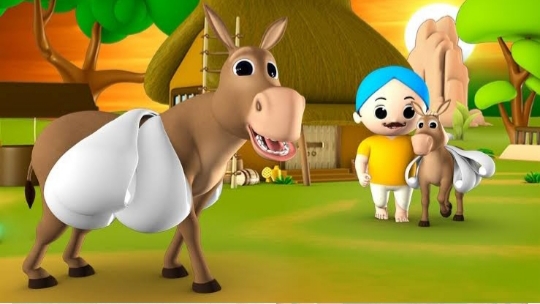
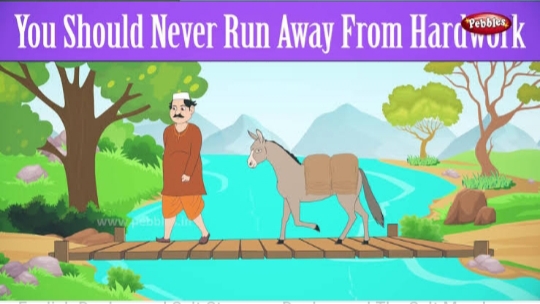
A salt seller used to carry the salt bag on his donkey to the market every day.

On the way they had to cross a stream. One day the donkey suddenly tumbled down the stream and the salt bag also fell into the water. The salt dissolved in the water and hence the bag became very light to carry. The donkey was happy.

Then the donkey started to play the same trick every day.

The salt seller came to understand the trick and decided to teach a lesson to it. The next day he loaded a cotton bag on the donkey.

Again it played the same trick hoping that the cotton bag would be still become lighter. But the dampened cotton became very heavy to carry and the donkey suffered. It learnt a lesson. It didn’t play the trick anymore after that day, and the seller was happy.

Moral of the story :–
Luck won’t favor always.